The Autobiography of a Nation
The Autobiography of a Nation Audio description
Transcript
“The autobiography of a nation is presented for the first time in the Festival of Britain and millions of the British people will be the authors of it…”
— Basil Taylor, The Ocial Book of the Festival of Britain, 1951
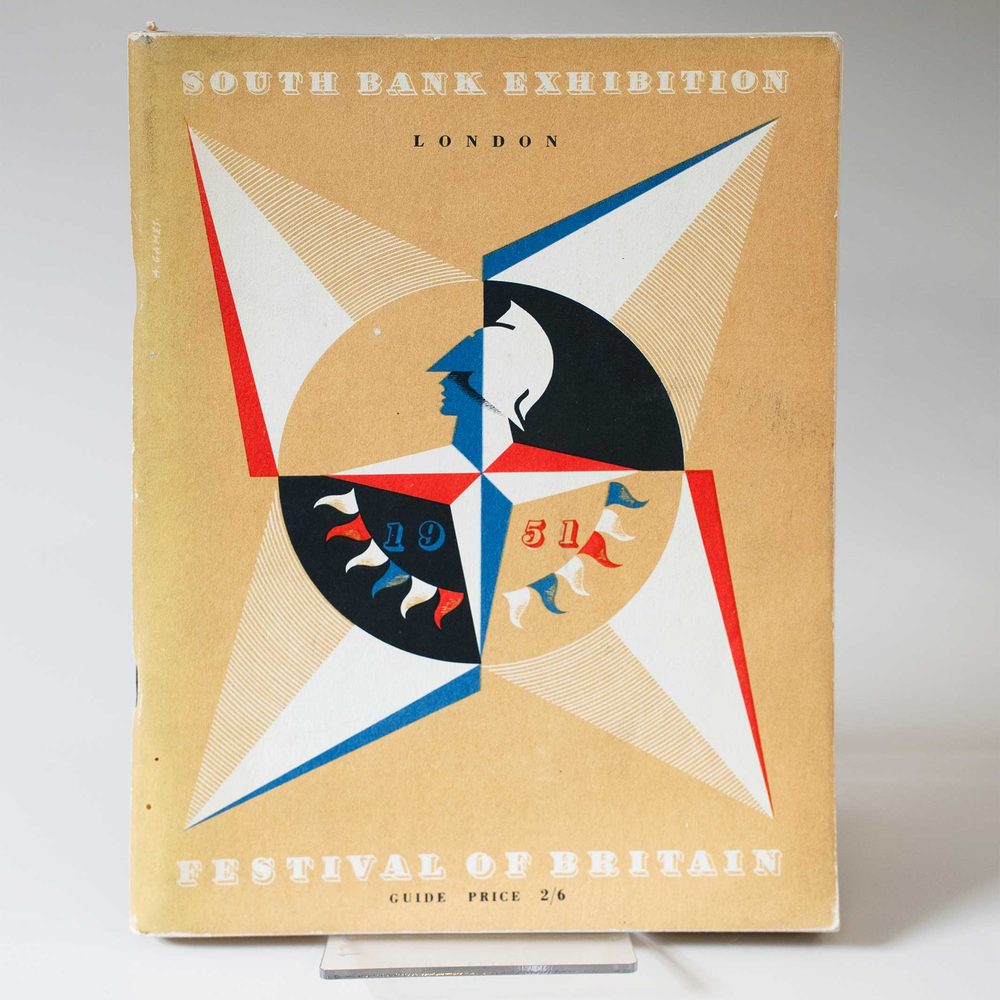
This year marks 75 years since the Festival of Britain, which ran from 3 May to 30 September 1951. Based at the Southbank in London, with satellite exhibitions in Poplar, Battersea and Kensington, it was conceived as a post-war ‘tonic for the nation’ and inspired by the Great Exhibition of 1851. The Festival showcased British design, manufacturing and art, and sought to reshape how Britain saw itself. More than 8.5 million visitors attended the main site and many thousands more encountered regional displays and events.
The main Festival site was populated with innovative pavilions designed by some of the leading architects and designers of the period. Sculpture played a central role, moving art beyond the gallery and into the public realm. Visitors could experience a remarkable range of sculpture commissioned from both established and emerging artists, including Henry Moore, Barbara Hepworth and Eduardo Paolozzi.
After the Festival concluded, the site was cleared and not all of the art survived. Drawing on the Archive of Sculptors’ Papers, this display considers what was built and what was destroyed, revealing how the archive preserves the Festival’s temporary sculptural landscape. It brings together photographs of sculpture in production and on site, sketchbooks, ephemera, and a maquette for Miranda by Arthur Fleischmann, the whereabouts of whose full-scale bronze version remains unknown.
Library display
Find out more about The Autobiography of a Nation, a library display celebrating 75 Years since the Festival of Britain through the Archive of Sculptors’ Papers.